Publishing a blog every week sounds productive until you realise nobody is reading it. That is where SEO blogging makes a difference. Instead of writing whatever comes to mind, you plan content around real searches, answer useful questions, and make articles easier for search engines to understand. The goal is not to publish more words. It is to publish something worth reading, remembering, and revisiting.
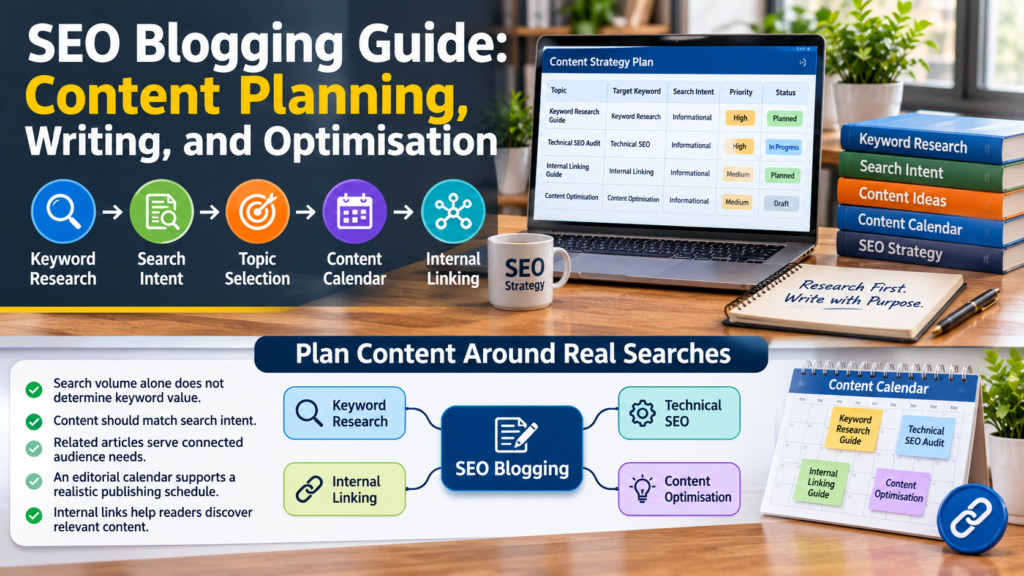
Table of Contents
- What Is SEO Blogging?
- How to Plan Blog Content
- Writing and Optimising SEO Blogs
- Common Blogging Mistakes
- Frequently Asked Questions
- Conclusion
What Is SEO Blogging?
SEO blogging combines useful writing with search engine optimisation. It involves researching topics, understanding search intent, organising information, and improving page elements so readers can discover relevant content through organic search.
Imagine running a digital marketing agency. An article titled “How Much Does SEO Cost?” can attract people researching services. A practical pricing guide can answer their questions while helping them decide what to do next.
That is the point. Every article should serve a reader, not simply fill a publishing calendar.
How to Plan Blog Content
Start with keyword research
Identify the phrases your audience actually searches for. Use Google Search Console, keyword research tools, and Google’s search results to discover relevant topics.
Do not select keywords based on search volume alone. A phrase with fewer searches may attract visitors who genuinely need your expertise.
For example, a small business owner searching for local SEO advice may be more relevant to an agency than someone researching SEO terminology for a school assignment.
Understand search intent
Before writing, inspect the results for your target query. Are they tutorials, comparisons, product pages, or definitions?
Match the format to the reader’s need. Someone searching for a beginner’s guide expects clear explanations, not a sales pitch disguised as an educational article.
Build a content plan
Create a calendar that connects related topics. A website covering SEO might publish guides about keyword research, technical audits, internal linking, and content optimisation.
Link related articles naturally so readers can explore useful information without repeatedly returning to Google.
Writing and Optimising SEO Blogs
Write for people first
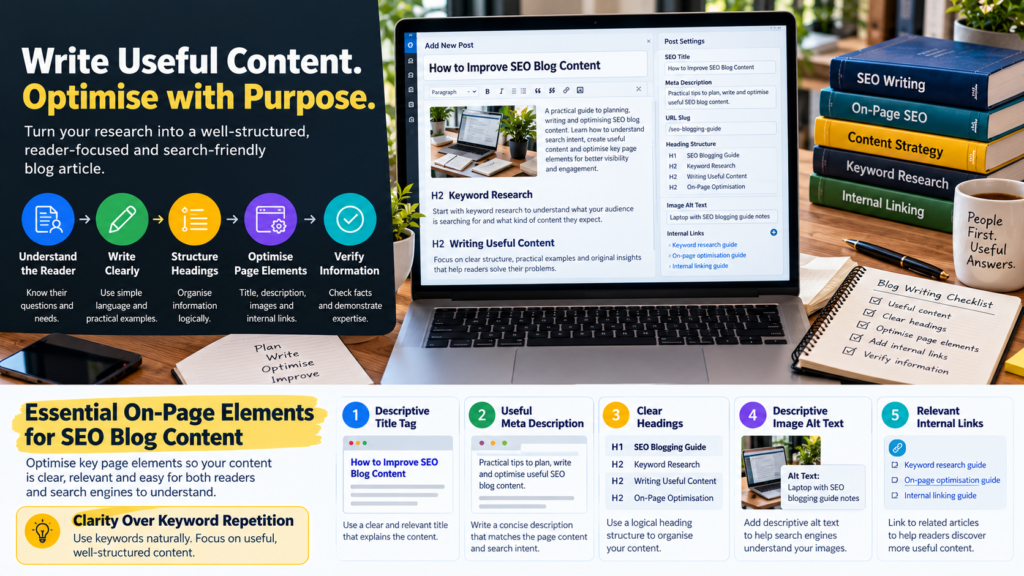
Start with the problem your reader wants to solve. Use clear headings, short paragraphs, practical examples, and direct explanations.
Avoid padding an article to reach an arbitrary word count. If a question needs 600 words, another 1,400 words will not automatically make the answer better.
Optimise important page elements
Write a descriptive title tag and a useful meta description. Include your main keyword naturally where appropriate, but never sacrifice clarity for repetition.
Organise the article with meaningful headings. Add descriptive alternative text to informative images and relevant internal links where they help readers.
Use your URL structure consistently. Keep pages focused, accessible, and easy to navigate.
Demonstrate experience and expertise
Readers need more than recycled definitions. Explain why a method works, where it can fail, and what someone should check before applying it.
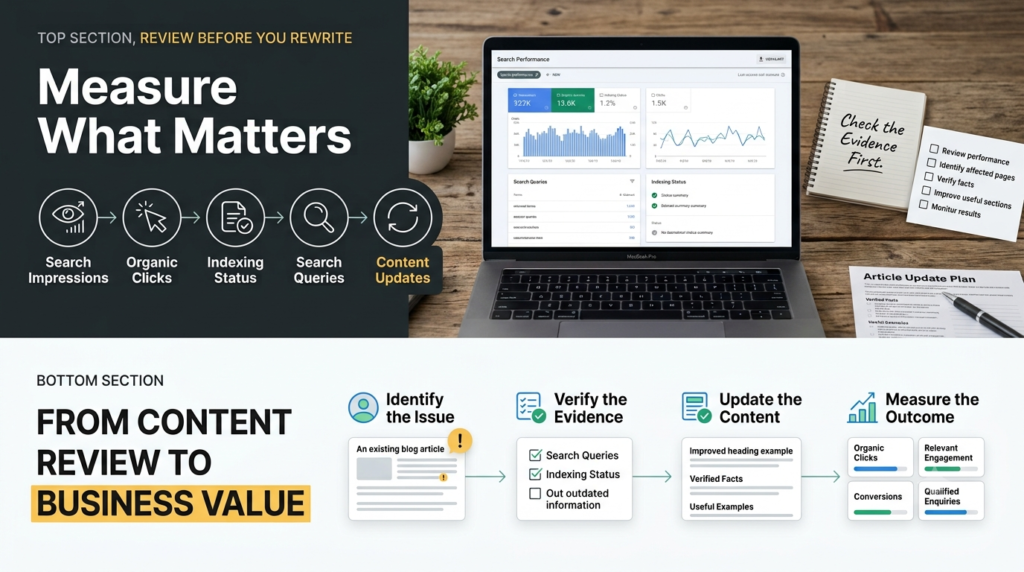
For instance, when discussing declining blog traffic, recommend checking Google Search Console impressions, clicks, indexing status, and affected queries before rewriting the entire article.
Use genuine case studies and verified results when available. Never invent client outcomes to make an article sound authoritative.
Common Blogging Mistakes
Publishing without research, targeting the same keyword across competing pages, ignoring outdated information, and adding irrelevant internal links can weaken a content strategy.
Another mistake is judging success only by rankings. Track organic clicks, relevant engagement, conversions, and enquiries alongside visibility.
SEO blogging is not an overnight growth trick. Results depend on competition, website quality, content usefulness, and many other factors.
Frequently Asked Questions
What is SEO blogging?
SEO blogging means creating useful blog content that meets search intent and follows sound optimisation practices to improve organic discoverability.
How often should I publish SEO blogs?
Choose a realistic schedule based on research, writing quality, and available resources. Consistent, useful publishing matters more than an arbitrary daily target.
How long should an SEO blog be?
Write enough to answer the reader’s question thoroughly. There is no universal word count that guarantees higher rankings.
Are SEO blog writing services worth considering?
SEO blog writing services may help businesses with limited time or specialist writing needs. Evaluate research quality, subject knowledge, editing standards, and factual accuracy before hiring.
How long does SEO blogging take to show results?
Timelines vary with competition, site authority, indexing, and content quality. Monitor performance over time rather than expecting immediate rankings.
Should I update old blog posts?
Yes, when information becomes outdated or performance reveals meaningful gaps. Verify facts, improve weak sections, and preserve useful information.
Conclusion
SEO blogging works best when planning, writing, and optimisation support one another. Research real questions, publish helpful answers, verify your claims, and measure meaningful outcomes. A blog should earn attention through usefulness, not keyword repetition.
CTA: Choose one existing article, review its search intent, and identify one improvement that genuinely helps readers. Make the change, monitor its performance, and use the findings to guide your next article.