People use social media to discover brands, ask questions, and compare options. If you searched “social media marketing what is,” it means using social platforms to connect with an audience and support goals such as awareness, enquiries, or sales.
Good social media marketing means understanding people, sharing relevant content, and checking whether it actually helps.
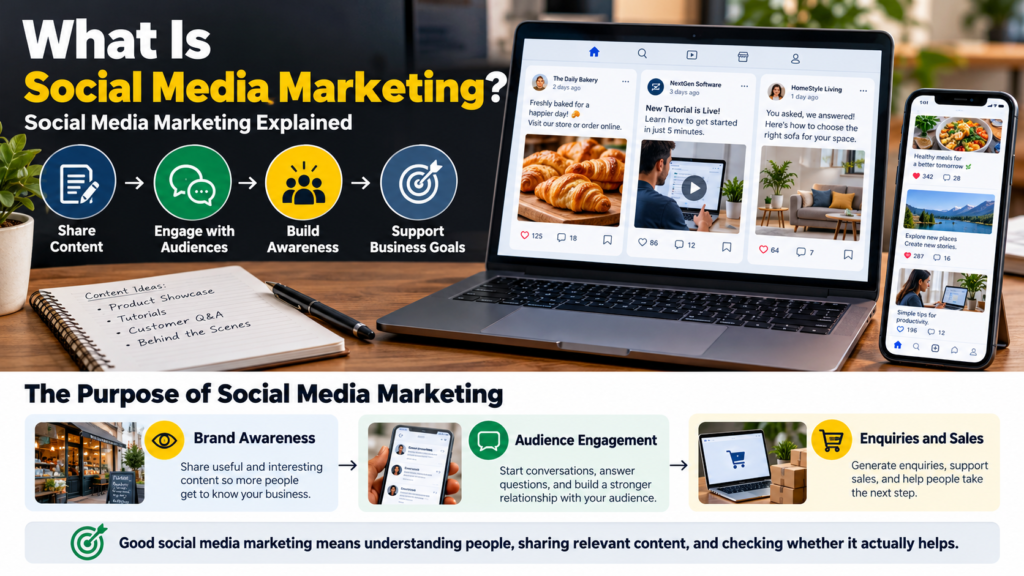
Table of Contents
- What Is Social Media Marketing?
- How Does It Work?
- Organic Social Media Marketing and Paid Ads
- Measuring Results
- Common Mistakes
- Frequently Asked Questions
- Conclusion
What Is Social Media Marketing?
Social media marketing is the planned use of platforms such as Instagram, Facebook, LinkedIn, TikTok, and YouTube to share content, engage with audiences, and achieve marketing goals. Activities can include organic posts, short videos, community conversations, creator partnerships, and paid advertising.
A bakery might share product photos and answer opening hour questions. A software company might publish tutorials and invite people to a demonstration. Their audiences and goals differ.
Social platforms help businesses communicate directly and learn what interests people. Useful content builds familiarity, but reach and engagement do not guarantee sales. Results also depend on audience fit, the offer, and customer experience.
How Does Social Media Marketing Work?
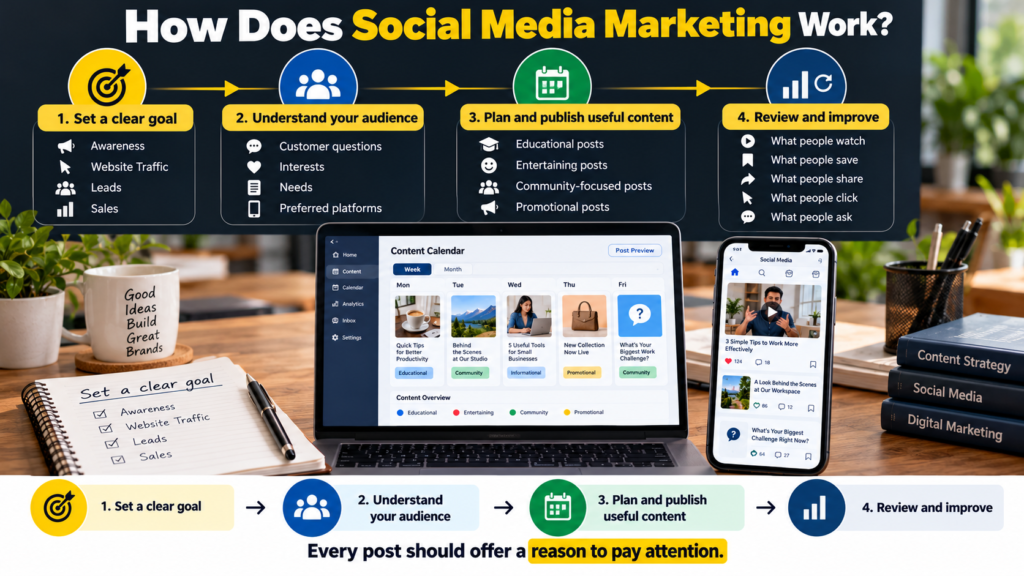
1. Set a clear goal
Choose a result before planning. Awareness, engagement, website traffic, leads, and sales are different goals. A clear objective guides content and measurement.
2. Understand your audience
Identify your audience, their questions, and their needs. Comments, customer conversations, and website data offer clues. Not every platform suits every audience.
3. Plan and publish useful content
Plan educational, entertaining, community focused, and promotional posts. A fitness coach might share exercise demonstrations, answer questions, and explain services. Every post should offer a reason to pay attention.
4. Review and improve
Review what people watch, save, share, click, or ask. Use these signals to improve content, changing one element at a time where possible.
Organic Social Media Marketing and Paid Ads
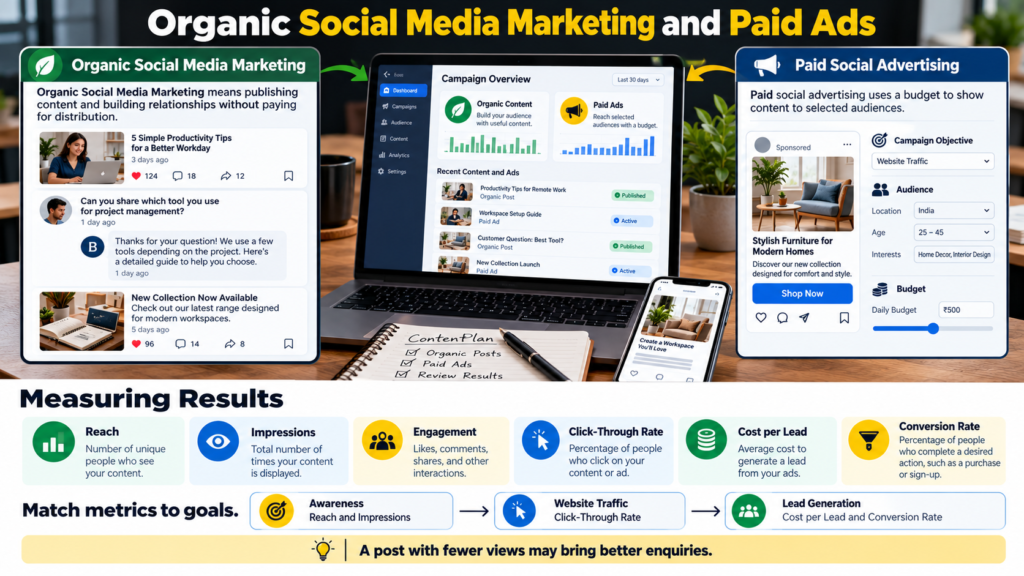
Organic Social Media Marketing means publishing content and building relationships without paying for distribution. It helps businesses answer questions and learn what interests audiences. Growth takes time, and reach varies.
Paid social advertising uses a budget to show content to selected audiences. Meta campaigns can support awareness, traffic, leads, or sales. Ads cannot fix a weak offer or landing page. Creative quality, targeting, tracking, and follow up matter.
Many businesses combine both. Organic content maintains communication, while paid campaigns extend relevant messages. The right balance depends on budget and goals.
Measuring Results
Match metrics to goals. Reach and impressions show exposure. Engagement includes comments, shares, and saves. Click through rate measures clicks after content or ads appear. Cost per lead shows the cost of each lead, while conversion rate tracks completed actions.
Look beyond one number. A post with fewer views may bring better enquiries. Check lead quality and sales when data is available, and do not claim causation without evidence.
Common Mistakes
Posting without a plan creates inconsistency. Chasing followers can distract from reaching the right audience. Copying competitors hides your strengths, while ignoring comments means missing feedback.
Use a manageable schedule, respond thoughtfully, and review results. Useful content and clear goals matter more than posting to fill a calendar.
Frequently Asked Questions
What is social media marketing in simple terms?
It is using social platforms to share relevant content, connect with people, and support goals such as awareness, enquiries, or sales.
Is social media marketing free?
Organic posting does not require advertising spend, but it takes time and resources. Paid campaigns need a separate budget.
Which platform should a beginner choose?
Start where your target audience is active and where you can publish suitable content consistently. You do not need every platform.
How often should a business post?
There is no universal ideal frequency. Choose a realistic schedule, maintain quality, and adjust based on audience response.
How long does social media marketing take to work?
Timing varies with audience, offer, competition, content, budget, and goals. Track progress over time rather than expecting instant results.
Conclusion
Social media marketing works best when each activity has a clear purpose. Understand your audience, publish useful content, choose organic or paid methods, and measure meaningful goals. If you are learning social media marketing what is, start with one platform and one objective. Improve using feedback and performance data.
CTA: Review your social media presence and choose one practical improvement to test this week.