Getting your website online is easy. Getting people to find it through Google is another story. Website ranking on Google depends on many factors, including content relevance, technical accessibility, competition, and the usefulness of your pages. Publishing more articles will not automatically put your business on the first page. You need a clear strategy, consistent improvements, and evidence to guide your decisions.
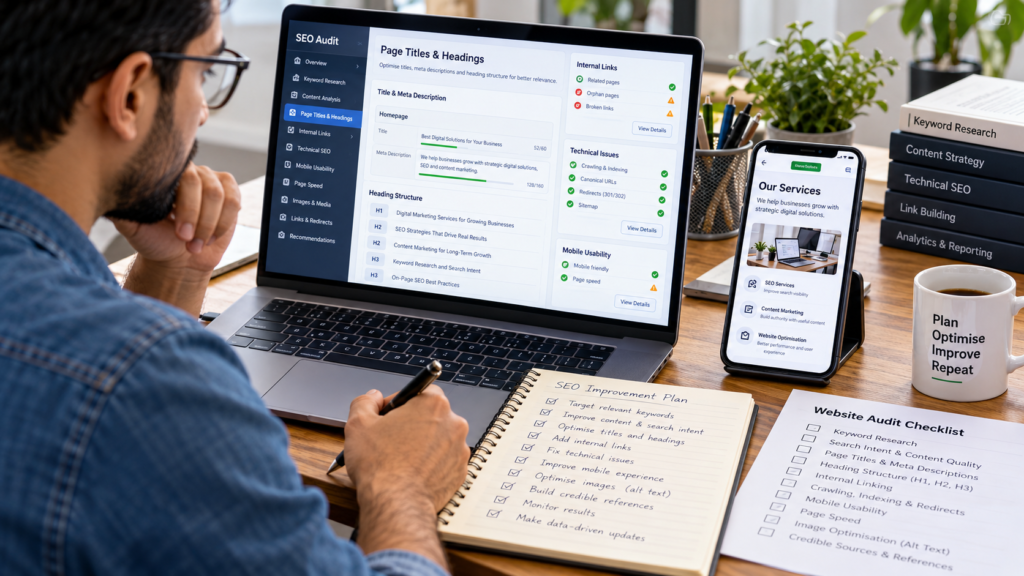
Table of Contents
- How Google Website Rankings Work
- Ten Ways to Improve Your Ranking
- Common SEO Mistakes
- Frequently Asked Questions
- Conclusion
How Google Website Rankings Work
Google discovers pages through crawling, organises information through indexing, and presents relevant results when people search. Its systems consider numerous signals to determine which pages best answer a query.
Your position can change with competition, search intent, location, and other factors. There is no reliable shortcut that guarantees a top ranking. The practical goal is to make your website accessible, useful, relevant, and trustworthy.
10 Ways to Improve Website Ranking on Google
1. Research relevant keywords
Identify the terms your potential customers use. Tools such as Google Search Console can reveal queries already bringing impressions to your website. Choose keywords that match your audience and business goals.
2. Match search intent
Study the results for your target query. If people want a tutorial, provide clear instructions instead of a sales page. Give visitors the information they came to find.
3. Create genuinely useful content
Answer important questions with accurate explanations, practical examples, and relevant details. Add original insights where possible. A longer article is not automatically better simply because someone recommends a particular word count.
4. Improve title tags and headings
Write descriptive titles that explain each page’s subject. Organise content with meaningful headings. Include your primary keyword naturally when relevant, without repeating it unnecessarily.
5. Strengthen internal linking
Connect related pages using descriptive anchor text. For example, an article about keyword research can link to a detailed guide about content planning. This helps readers discover relevant information and supports search engines in understanding site structure.

6. Fix technical SEO problems
Check crawling, indexing, canonical URLs, redirects, and broken links. Google Search Console can help identify indexing issues. Resolve problems that prevent important pages from being discovered or understood.
7. Improve mobile usability and speed
Ensure pages work properly on mobile devices. Compress oversized images, reduce unnecessary scripts, and review Core Web Vitals. Faster pages can improve usability, although speed alone does not guarantee higher rankings.
8. Build credible authority
Earn relevant links by publishing useful research, resources, and expert explanations. Avoid buying manipulative links. Demonstrate experience through accurate author information, genuine examples, and trustworthy references.
9. Optimise images and page experience
Use suitable image formats, descriptive filenames, and helpful alternative text. Keep navigation clear and make important information easy to find. Remove intrusive elements that interfere with reading.
10. Measure results and update content
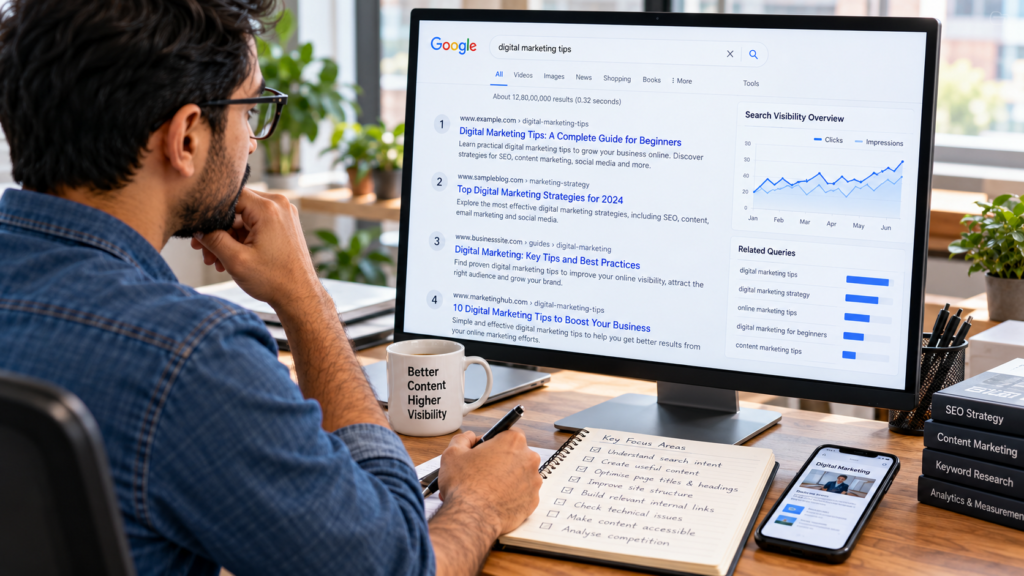
Track impressions, clicks, rankings, and conversions. Identify pages losing visibility and investigate possible causes before rewriting them. Update outdated information when necessary, preserving sections that still serve readers well.
Common SEO Mistakes
Keyword stuffing, copying competitors, publishing thin articles, and expecting instant results can waste effort. Another mistake is treating every ranking fluctuation as a technical emergency.
Review several signals before making major changes. A page receiving impressions but few clicks may need a clearer title. A page with declining impressions may require deeper investigation into relevance, competition, indexing, or content quality.
Frequently Asked Questions
How long does website ranking on Google take?
There is no fixed timeline. Competition, website history, technical health, and content quality influence how quickly changes become visible.
How can I check my Google ranking?
Use Google Search Console to review queries, impressions, clicks, and average position. Search results can vary by location and context.
Does publishing daily improve rankings?
No. Publishing frequency alone does not guarantee better positions. Prioritise useful, accurate content over unnecessary volume.
Are backlinks still important for SEO?
Relevant, naturally earned links can support discovery and authority. Manipulative link schemes can violate Google’s spam policies.
Can I guarantee first page rankings?
No credible SEO professional can guarantee a specific Google position. Rankings depend on many factors beyond your direct control.
Conclusion
Improving website ranking on Google requires useful content, sound technical foundations, relevant keywords, and consistent measurement. Better Google search visibility comes from understanding your audience and fixing meaningful problems, not chasing every SEO trend.
CTA: Start with one important page today. Check its search performance, identify its biggest weakness, and make one measurable improvement before moving to the next.